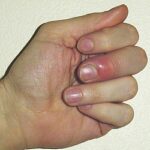
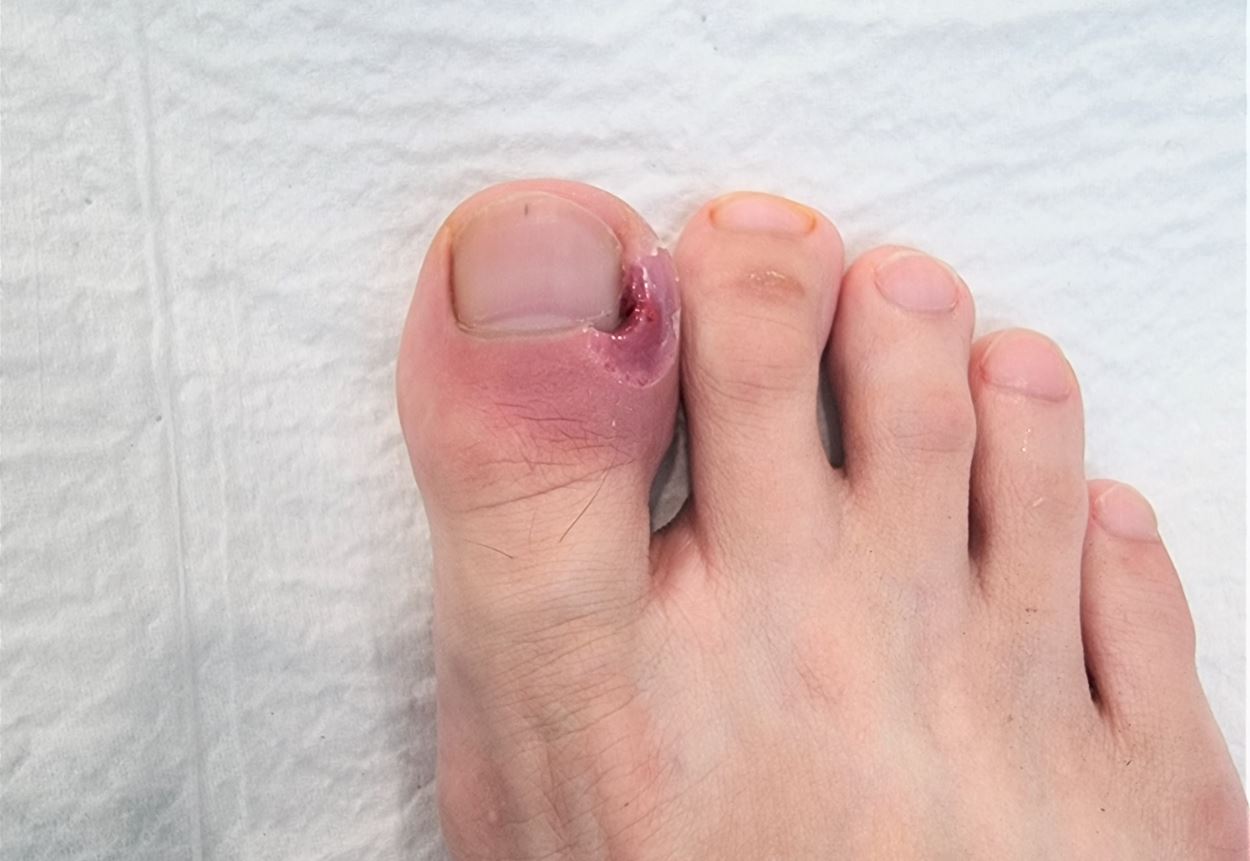
Paronychia treatments require medical attention when home care fails after 2-5 days, pus-filled abscesses form, fever develops, or red streaks indicate spreading infection. Diabetics, immunocompromised individuals, or cases with worsening pain/swelling need prompt evaluation to prevent bone involvement or systemic spread.
No Improvement After Home Care
Seek care if symptoms persist beyond 2-3 days of warm soaks, elevation, and protection despite conservative treatment. Acute paronychia should show reduction within 48 hours; lack of progress signals need for antibiotics or drainage.
Pus-Filled Abscess Formation
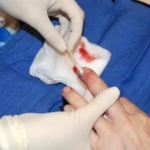
Immediate medical help required for fluctuant abscesses at nail base/sides—doctors perform incision and drainage under local anesthesia. Untreated pus pockets risk deeper tissue spread, especially in chronic cases.
Systemic Signs of Spreading Infection
Fever, chills, red streaks (lymphangitis), joint/muscle pain, or nail discoloration demand urgent evaluation. These indicate cellulitis or deeper involvement requiring IV antibiotics and imaging.
High-Risk Patients
Diabetics, immunocompromised, or circulation-impaired individuals seek care at first sign of paronychia due to poor healing and sepsis risk. Even mild redness warrants immediate provider contact.
Conclusion
Paronychia requires medical attention for treatment failure after 2-5 days, abscesses, systemic symptoms, spreading redness, or high-risk conditions. Early intervention prevents rare but serious complications like osteomyelitis.
FAQs
Timeline for home treatment before doctor visit?
2-3 days maximum for acute cases; 4-5 days for children. Persistent pain/swelling despite soaks needs evaluation.
What indicates abscess needing drainage?
Fluctuant, pus-filled pocket at nail fold with throbbing pain and warmth. Self-drainage risks worsening; professional I&D essential.
Red streaks significance and action?
Lymphangitis signaling rapid spread—emergency care within hours. Accompanied by fever/chills indicates hospitalization risk.
Diabetics paronychia management difference?
Immediate provider contact even for mild redness due to neuropathy masking severity and poor healing increasing osteomyelitis risk.
Chronic paronychia medical triggers?
No improvement after 1-2 weeks antifungals/topicals, nail deformity, or multiple recurrences. Biopsy/culture guides therapy.
Fever threshold requiring ER?
Any fever >100.4°F (38°C) with local signs—rule out systemic infection immediately via bloodwork/imaging.
Children paronychia evaluation criteria?
Fever, expanding redness, or no improvement after 4-5 days soaks. Pediatric dosing/culture prevents complications.
Post-drainage follow-up timeline?
Re-evaluation 48 hours post-I&D; antibiotics 5-7 days. Watch for recurrence or osteomyelitis signs like persistent pain.
Immunocompromised urgency level?
Same-day provider visit for any nail fold erythema/swelling due to rapid progression risk to felon or sepsis.
Lab tests when indicated?
Pus culture for resistant bacteria/fungi if no response to empiric antibiotics or chronic/recurrent cases.